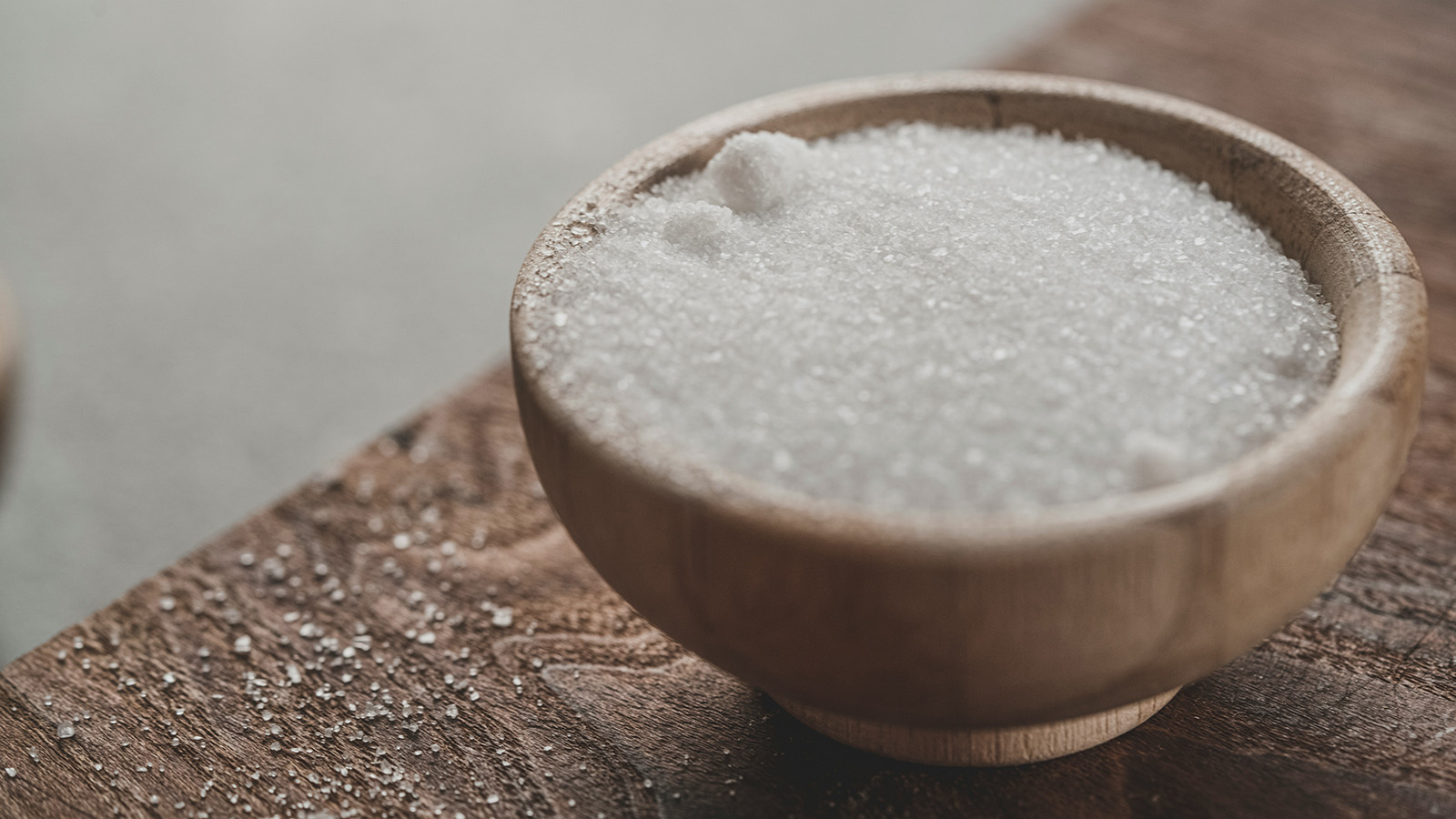
Salt has been a kitchen staple for centuries — not just for flavor, but because the sodium it contains supports your body’s daily functions: staying hydrated, keeping nerves firing, and muscles moving. (3)
Different types of salt add subtle differences in taste, texture, and nutrition, so the one you choose can make a small but meaningful impact. Two of the most common options you’ll see in recipes and on store shelves are kosher salt and sea salt — but what’s actually the difference between them?
Let’s break it down.
Salt vs. Sodium: Is There a Difference?
Here’s the scoop: salt is what you sprinkle on your food, while sodium is the mineral inside it that your body actually needs. (3) Knowing how much sodium you’re getting each day is key to striking the right balance — more on that below.
Types of Cooking Salt: A Quick Overview
Before diving into the kosher vs. sea salt comparison, it helps to know where each one fits in the broader landscape of cooking salts.
Table salt is the classic salt you find in shakers, and it stands out because it’s fortified with iodine. One teaspoon contains about 380 micrograms of iodine — an essential mineral your body can’t make on its own. (2, 3) Iodine helps your thyroid produce hormones that regulate metabolism, growth, body temperature, and muscle and nerve function. (2, 3) Because many Canadian soils are naturally low in iodine, iodine was added to table salt in 1949 to help prevent deficiencies. (2)
Kosher salt has a coarse, flaky texture and is typically free of additives. It’s popular with chefs because it’s easy to pinch and sprinkle, and it’s usually not iodized. (1)
Sea salt is made by evaporating seawater and may contain trace minerals that give it subtle, unique flavors. Like kosher salt, it’s typically not iodized. (1)
Kosher Salt vs. Sea Salt: What’s the Difference?
While kosher salt and sea salt are both popular alternatives to table salt, they differ in a few important ways.
| Kosher Salt | Sea Salt | |
|---|---|---|
| Texture | Coarse, flat flakes | Varies — fine to coarse crystals |
| Flavor | Clean, mild saltiness | Mild; trace minerals may add subtle complexity |
| Iodized? | Typically no | Typically no |
| Trace minerals | Minimal | Yes — picked up from seawater |
| Dissolves quickly? | Yes — flakes dissolve well | Depends on grind size |
| Best for | Cooking, seasoning meat, baking | Finishing dishes, specialty cooking |
Texture and flavor
Kosher salt has large, flat flakes that are easy to pinch and distribute evenly — which is why it’s a favorite among chefs for seasoning meat and controlling flavor during cooking. Sea salt tends to vary more in texture depending on where it’s sourced and how it’s processed, ranging from fine grains to larger crystals. Some varieties carry subtle mineral notes from the seawater they’re made from.
Iodine content
This is one of the most nutritionally significant differences. Both kosher salt and sea salt are typically not iodized, meaning they don’t provide the iodine that table salt does. If you cook primarily with kosher or sea salt and don’t eat other iodine-rich foods (like fish, dairy, or eggs), it’s worth being mindful of your iodine intake.
When to use each
Use kosher salt when: seasoning meat before cooking, salting pasta water, baking (where precise dissolving matters), or any time you want clean, straightforward saltiness.
Use sea salt when: finishing a dish just before serving, adding a visual or textural element, or when you want a subtle mineral flavor — especially in simple preparations where the salt itself can shine.
How Much Sodium Do Canadians Eat?
You’ve probably heard the saying, “Too much of a good thing isn’t a good thing” — and that applies to sodium. While it’s an essential nutrient, a wide variety of foods contain added sodium for flavor, making it easy to exceed the recommended daily intake.
The average Canadian consumes about 3,400 mg of sodium per day — more than double the 1,500 mg recommended for healthy adults. (3) Being aware of where sodium is coming from in your diet can help you find the right balance.
The good news? By focusing on fresh, minimally processed foods and experimenting with herbs, spices, and other seasonings, you can enjoy flavorful meals while keeping sodium in check.
Little Potatoes: A Naturally Sodium-Free Base
This is where Little Potatoes really shine. All fresh Little Potatoes are naturally sodium-free and packed with essential nutrients, making them a perfect canvas for flavorful, satisfying meals — however you season them.
Many of our seasoning kits, like in A Little Hot Honey™ and A Little Lemon & Garden Herb™, are also low in sodium. Whether you’re roasting, air-frying, or boiling, Little Potatoes give you the flexibility to get creative in the kitchen — letting the natural taste of the potato take center stage while still giving your meals an exciting twist.
The Takeaway
Enjoying salt is all about balance. While it adds flavor, texture, and even some nutrients (like iodine in table salt), it’s easy to tip the scale. Kosher salt and sea salt are both great options for cooking and finishing dishes, though neither provides the iodine that table salt does — something worth keeping in mind if they’re your go-to.
Little Potatoes are naturally sodium-free and nutrient-dense, giving you a blank canvas to build meals bursting with flavor — whether you reach for kosher salt, sea salt, or your favorite herbs and spices.
Disclaimer: This blog is for general information only and isn’t a substitute for personalized nutrition advice.
Frequently Asked Questions
What is the difference between kosher salt and sea salt?
Kosher salt has large, flat flakes and a clean, mild flavor, making it ideal for cooking and seasoning. Sea salt is made from evaporated seawater and may contain trace minerals that give it subtle flavor complexity. Both are typically not iodized, unlike table salt.
Can I substitute kosher salt for sea salt in recipes?
Yes, in most cases. Both have a similar clean saltiness, though the texture differs. If a recipe calls for fine sea salt and you’re using coarse kosher salt, you may need to adjust the amount slightly since coarser salt takes up more volume per teaspoon.
Which salt is healthiest — kosher, sea, or table salt?
From a sodium standpoint, all salts are similar. The key nutritional difference is iodine: table salt is fortified with iodine, while kosher and sea salt typically are not. If you rely heavily on kosher or sea salt, make sure you’re getting iodine from other dietary sources like fish, dairy, or eggs.
Why is kosher salt called “kosher”?
The name refers to its use in the koshering process — its coarse, flat flakes are effective at drawing moisture out of meat, which is part of making meat kosher according to Jewish dietary law. The salt itself is not necessarily certified kosher.
Is sea salt better than regular salt?
Not necessarily. Sea salt is less processed and may contain trace minerals, but the amounts are generally too small to make a meaningful nutritional difference. Table salt’s iodine fortification is actually a notable nutritional advantage for people who don’t get iodine from other sources.
Are Little Potatoes high in sodium?
No — all fresh Little Potatoes are naturally sodium-free, making them a great base for building balanced, lower-sodium meals.
References
1. Health Canada. (2017, May 4). Iodine – Nutrition biomarkers, Cycle 1 – Canadian Health Measures Survey. Government of Canada. https://www.canada.ca/en/health-canada/services/food-nutrition/food-nutrition-surveillance/health-nutrition-surveys/canadian-health-measures-survey/iodine-nutrition-biomarkers-cycle-1-canadian-health-measures-survey-food-nutrition-surveillance-health-canada.html
2. IBD Centre of BC. (2019). Food sources of iodine. https://www.ibdcentrebc.ca/wp-content/uploads/Food-Sources-of-Iodine.pdf
3. UnlockFood.ca. (2019, January 29). Get the scoop on salt. Dietitians of Canada. https://www.unlockfood.ca/en/Articles/Heart-Health/Get-the-Scoop-on-Salt.aspx