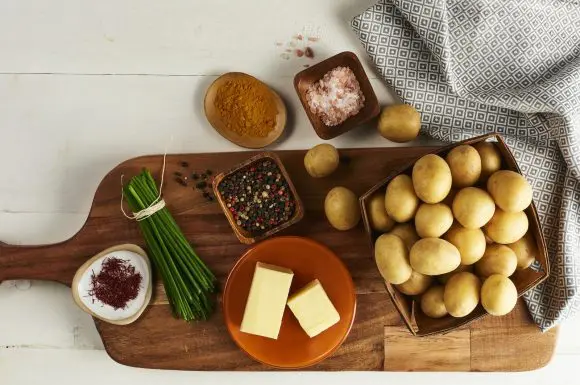
We all know Little Potatoes are tasty, versatile, and easy to cook. But did you know that your favorite little spuds are also a natural source of resistant starch — a unique type of carbohydrate with some surprising health benefits?
The best part: with the right cooking and cooling methods, you can actually boost the resistant starch content of your Little Potatoes and gain some unexpected benefits for digestion, fullness, and blood sugar balance. Let’s take a closer look.
What is Resistant Starch?
Most starches in the foods we eat are broken down quickly into glucose, which your small intestine absorbs for energy. Resistant starch is different — as the name suggests, it “resists” digestion in the small intestine and travels to the large intestine instead. (2)
Once there, it acts as a prebiotic, feeding the beneficial bacteria in your gut. This can help:
- Keep digestion running smoothly
- Support better blood sugar balance
- Help you feel fuller for longer
Essentially, resistant starch is a carbohydrate that behaves a bit like fiber — giving your gut a boost while also providing some energy. It’s found naturally in a variety of foods, including potatoes, legumes, unripe bananas, and whole grains. Potatoes are one of the most accessible and versatile sources.
How Much Resistant Starch Do Potatoes Have?
The resistant starch content of potatoes isn’t fixed — it depends heavily on how you cook and serve them, not on the color or variety (red, yellow, or purple). (1)
Here’s how the numbers shift by cooking method:
| Preparation method | Resistant starch level |
|---|---|
| Freshly boiled or baked, eaten hot | Lower |
| Cooked and cooled in the fridge | Higher |
| Cooked, cooled, then reheated | Highest |
Cooking and then cooling potatoes causes a process called starch retrogradation — the starch molecules rearrange into a structure that resists digestion. Reheating after cooling preserves much of this structure, meaning reheated potatoes can actually have more resistant starch than freshly cooked ones. (1)
How to Boost Resistant Starch in Little Potatoes
You don’t need to change what you eat — just how you prepare it. Here are simple, practical ways to increase resistant starch when cooking with Little Potatoes.
Cook and cool overnight
Boil or roast Little Potatoes, then refrigerate them for at least a few hours — ideally overnight. This cooling period is where starch retrogradation happens and resistant starch levels rise.
Make potato salad
Potato salad is one of the best ways to enjoy the benefits of resistant starch in potatoes. Cook your Little Potatoes, chill them overnight, then toss with fresh herbs, a tangy vinaigrette, or a light yogurt dressing. Eaten cold, the resistant starch content stays elevated.
Meal prep and reheat
Cook a batch of Little Potatoes at the start of the week, refrigerate, and reheat portions as needed throughout the week. You’ll save time, reduce decision fatigue at dinner, and naturally boost resistant starch — a win on every front.
Serve alongside other resistant starch foods
For an extra gut-health boost, pair your Little Potatoes with other resistant starch–rich foods like lentils, chickpeas, or black beans. Together they make a fiber- and resistant starch–rich base for balanced, satisfying meals.
Why Little Potatoes Are a Smart Choice
Beyond resistant starch, Little Potatoes bring a lot to the table nutritionally. They’re naturally sodium-free, a good source of potassium and vitamin C, and provide fiber — especially with the skin on. They’re also pre-washed and ready to cook, which makes them one of the most convenient whole-food ingredients to build meals around.
Whether you’re eating them hot, cold, or reheated, Little Potatoes are one of the tastiest ways to work resistant starch into your everyday meals.
Disclaimer: This blog is for general information only and is not a substitute for personalized nutrition advice.
References
1. Beals, K. A. (2019). Potatoes, nutrition and health. American Journal of Potato Research, 96(2), 102–110. https://doi.org/10.1007/s12230-018-09705-4
2. McKinney, C. (n.d.). What is resistant starch? The Johns Hopkins Patient Guide to Diabetes. https://hopkinsdiabetesinfo.org/what-is-resistant-starch/
FAQ:
Do potatoes have resistant starch?
Yes — potatoes are a natural source of resistant starch. The amount varies depending on how they’re cooked and served. Cooked and cooled potatoes have significantly more resistant starch than freshly cooked, hot potatoes.
Do cooked and cooled potatoes have more resistant starch?
Yes. Cooling cooked potatoes triggers a process called starch retrogradation, where the starch molecules rearrange into a form that resists digestion. Research shows that cooling potatoes after cooking increases their resistant starch content. (1)
Does reheating potatoes destroy resistant starch?
No — reheating cooked and cooled potatoes actually preserves a significant portion of the resistant starch formed during cooling. Reheated potatoes tend to have more resistant starch than freshly cooked potatoes eaten hot. (1)
What are the health benefits of resistant starch in potatoes?
Resistant starch acts like a prebiotic fiber in the body. It feeds beneficial gut bacteria, supports digestive health, helps with blood sugar balance by slowing glucose absorption, and may contribute to feeling fuller for longer. (2)
Which potato preparation has the most resistant starch?
Potatoes that are cooked, cooled in the fridge overnight, and then reheated tend to have the highest resistant starch content. Eating cooled potatoes cold — as in potato salad — is also an effective way to maximize resistant starch intake. (1)
Is resistant starch good for you?
Yes, for most people. Resistant starch supports gut health, feeds beneficial bacteria, and may help with blood sugar management and satiety. As with any dietary change, individual responses vary — if you have specific digestive health concerns, speaking with a registered dietitian is a good idea.